College sports has been waiting on Congress to fix NIL for years. On December 3, 2025, Congress had its best shot — and blew it. The SCORE Act, the most substantive federal NIL framework legislators had ever gotten this close to passing, never received a real floor vote. The procedural rule squeaked through 210-209. Then nothing. The bill was pulled, and the moment died.
The reason it died is almost too on-the-nose to believe: Lane Kiffin signed a 7-year, $91 million deal with LSU right as the two most powerful Republicans in the House — Speaker Mike Johnson and Majority Leader Steve Scalise, both Louisiana men, both confirmed LSU devotees — were arm-twisting their colleagues to pass the thing.
House Minority Leader Hakeem Jeffries called it the “Lane Kiffin Protection Act.” He wasn’t joking, and he wasn’t wrong.
What the SCORE Act Actually Was
The name — Saving College Opportunities Resources and Education Act — sounded like something designed to protect student athletes. Read the fine print and the story gets more complicated. The SCORE Act was, at its core, an NCAA antitrust exemption. It shielded the NCAA and Power Conference schools from the kind of litigation that had been dismantling their control over athlete compensation since Alston in 2021. Critics — including the entire Congressional Black Caucus, save for Reps. Figures and Bynum — argued it didn’t expand athlete rights so much as it capped them. Instead of giving athletes a clearer path to revenue sharing, it restricted their employment options and handed the NCAA a legal firewall.
The NCAA and Power Conference schools spent more than $15 million lobbying for this bill. That number tells you something about who the legislation was actually written for.
Rep. Hakeem Jeffries (D-NY) today in a news conference ripped Republicans over the SCORE Act, referring to it as the “Lane Kiffin Protection Act” and suggesting that “big donors at LSU” were behind Mike Johnson and Steve Scalise’s motives to bring the bill to the floor.
— Ross Dellenger (@RossDellenger) December 4, 2025
Rep. Yvette Clarke led the CBC’s opposition. The argument wasn’t complicated: a bill sold as protecting college athletes was being written by the institutions that profit most from those athletes, with the heaviest lobbying money flowing from the same conferences that had spent decades suppressing athlete pay. The CBC’s near-unanimous no wasn’t obstructionism — it was a reading comprehension test that most of the bill’s supporters failed.
How a Coaching Hire Torpedoed a Congressional Vote
Then came Kiffin.
The timing was genuinely extraordinary. Johnson and Scalise were working the phones, pulling in votes, trying to get the SCORE Act across the finish line. And then their school — their school — signed the most expensive coaching contract in college football history. Kiffin left Ole Miss mid-playoff run for the deal.
You cannot overstate how bad this looked. Two of the most powerful legislators in Washington, both pushing hard for a bill that would protect the financial structure of college football, both superfans of the program that just handed a coach $91 million. The bill’s opponents didn’t have to construct a conspiracy theory. They just had to point.
Jeffries pointed. “Lane Kiffin Protection Act” entered the record at a December 2025 press conference, and it stuck because it was accurate. The SCORE Act was designed to preserve the system — the system where schools and coaches and conferences get rich while athletes navigate a patchwork of state laws and NCAA bylaws. The bill’s GOP defectors — Chip Roy, Scott Perry, Byron Donalds among them — killed the procedural vote from the right, but the Kiffin deal handed the left everything it needed to kill the optics permanently.
Why the 2026 Retry Faces the Same Problem
We covered Trump’s April 3 executive order — “Urgent National Action to Save College Sports” — in our May 3 piece. The short version: it directed the NCAA to set transfer, eligibility, and NIL rules by August 1, 2026, and it had real teeth in exactly one place (the transfer portal restrictions) while being largely aspirational everywhere else. The EO exists because Congress failed. The vacuum the SCORE Act left behind is the reason a president felt compelled to act by executive fiat.
Now there’s a 2026 congressional retry: the College SPORTS Act, sponsored by Reps. Bynum and McClain. It’s trying to learn from December’s collapse. Whether it can thread the needle between the NCAA’s lobbying money, the CBC’s equity concerns, and the inevitable optics problem — the one where every major college sports decision ends up looking like it was designed to protect powerful men and their programs — remains genuinely unclear.
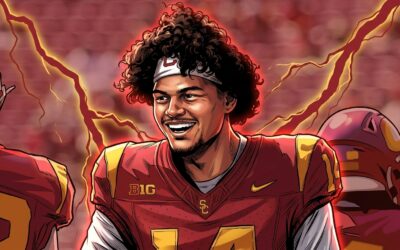
Dillon Gabriel was the face of the NIL transfer portal era: moved programs, maximized his market, ended up drafted by the Cleveland Browns in the 2025 NFL Draft. The system produced him. It also produced a world where Congress can’t pass a law without a coach’s $91 million deal becoming the story. Those two things are connected. The money that flows through college sports now is so large, so visible, and so politically entangled that any legislation touching it immediately becomes a proxy war over who gets to keep it.
Congress didn’t fail to pass the SCORE Act because the legislation was too complicated. It failed because college sports has already colonized the people who were supposed to regulate it. Johnson and Scalise aren’t corrupt in any legal sense — they’re just LSU fans who wanted a bill that helped LSU. That’s the problem. In 2026, wanting a bill that helps your team is enough to make the whole project collapse.