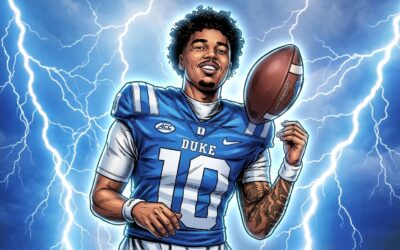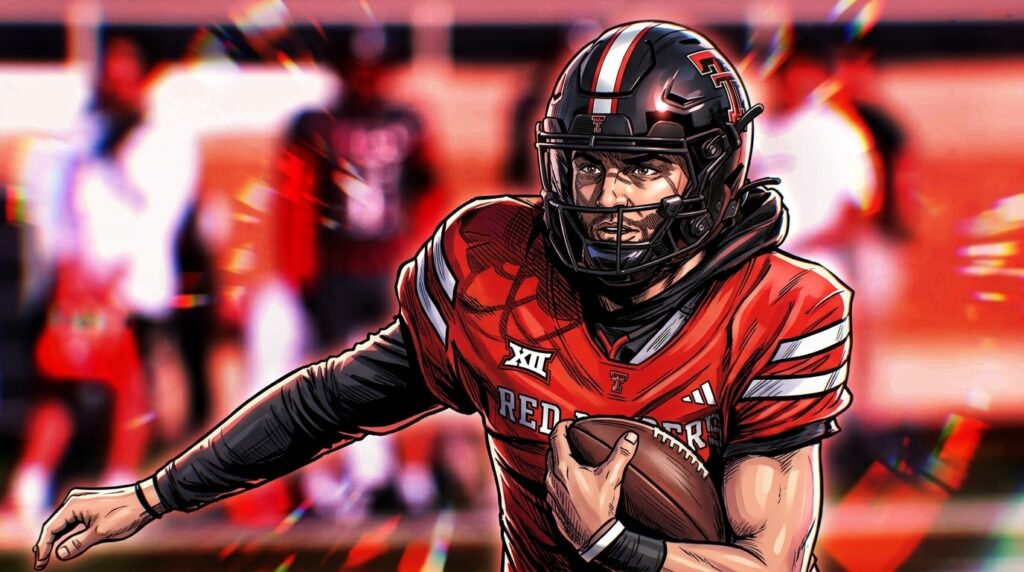
Brendan Sorsby spent four years betting on sports, checked into treatment for a gambling addiction, sued the NCAA to keep playing football, won in court, and then walked away from his college career anyway because the school that fought for him wasn’t actually going to play him. Somehow the NCAA still comes out looking like the bigger mess.
Per court documents reported by ESPN, Sorsby placed roughly $90,000 in bets between 2019 and 2023, including at least 40 wagers on Indiana football, his own team, during his redshirt freshman year in 2022. That number sounds like a scandal until you see the shape of it: those Indiana bets ranged from $1 to $114 each, totaling around $850. That’s not a guy fixing games; it’s a guy who couldn’t stop clicking a button.
The same court record draws a line that keeps getting skipped past: Sorsby never bet on a game he actually played in. He stopped wagering on Indiana around October 22, 2022, roughly two weeks before his lone appearance that season, against Penn State. Addiction and on-field integrity are two separate questions here, not one.
They’re not clean facts, though. Sorsby has said the bets made him feel connected to a team he was watching from the sideline. Fine, except two of those wagers only cashed if his own team played worse: an under on a teammate’s passing yards, an under on Indiana’s first-half performance. Connection doesn’t usually come with a payout for rooting against the guys in your own meeting room.
Before any lawyers got involved, ESPN broke that Sorsby was stepping away for treatment:
Sources: Texas Tech transfer quarterback Brendan Sorsby is checking into a residential treatment program for a gambling addiction. He’s under NCAA investigation in the wake of the discovery of Sorsby making thousands of bets via a gambling app. https://t.co/O7gNSqDaKE
— Pete Thamel (@PeteThamel) April 27, 2026
That part isn’t complicated. A young quarterback admitted he had a problem and got help. What happened next is where the sport lost the plot.
A Texas judge, Ken Curry, granted Sorsby a preliminary injunction on June 8, allowing him to suit up for Texas Tech, the reigning back-to-back Big 12 champs and a CFP contender, with only a two-game suspension attached. Athletic directors lost it. “How is anyone ever going to trust the outcome of a game again?” TCU coach Sonny Dykes asked. Florida AD Scott Stricklin said he was “stunned” a court would even entertain the question. Kansas State’s Gene Taylor skipped the diplomatic version: “It’s f***ing bullshit. I know the kid has a problem. Well, get well and focus on your problem.” One anonymous Big 12 AD summed it up simplest: “We officially lost our soul.”
That anger was really aimed at a power shift: a state court, not the NCAA, now deciding who plays once a ruling gets challenged by a lawyer with a filing fee. Georgia AD Josh Brooks called it a threat to competitive integrity. ACC commissioner Jim Phillips called it “a horrendous pattern eroding the integrity of our process.” They’re describing an organization that spent decades building an enforcement apparatus and found out it evaporates the moment someone challenges it in a courtroom instead of an appeals committee.
Ten days after winning, Sorsby gave the win back. Texas Tech made clear it wasn’t going to play him regardless, so on June 18 he dropped the lawsuit with prejudice: no refiling, no second round, career over. He’s now eligible for the NFL’s supplemental draft, for whatever that’s worth to a quarterback with three career starts. Ten days is what the injunction ended up buying him, and nothing more.
Gambling in college locker rooms isn’t a Lubbock problem, either. Programs at Iowa, Iowa State, and multiple basketball schools have run their own investigations recently, and Georgia coach Kirby Smart isn’t shy about the scale of it: “Education. It’s all you can do. It’s rampant. It’s all over.” Sorsby is one player who got caught, disclosed it, and went to treatment. What everyone should actually be angry about is that the system built to handle cases like his got outmaneuvered by a temporary restraining order and had nothing left to say when it mattered.