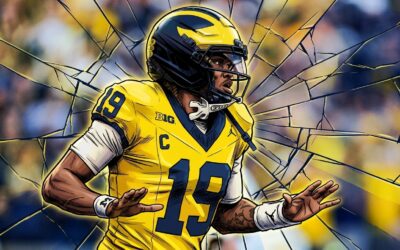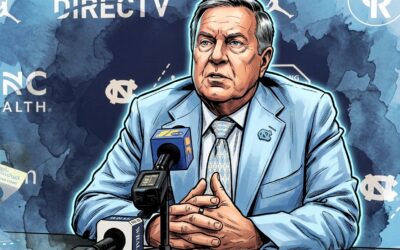
Congress pulled the SCORE Act from the House floor on May 19th — the second time in roughly six months it has failed to reach a vote — and the cause of death had nothing to do with revenue-sharing percentages. The entire Congressional Black Caucus, all 51 members, walked away because college sports institutions had stayed publicly silent after the Supreme Court’s Louisiana v. Callais decision weakened the Voting Rights Act. CBC Chair Rep. Yvette Clarke said it plainly: “Institutions that profit from Black talent…have a responsibility to stand with those communities when their fundamental rights are under attack.” The programs that recruit Black athletes, build donor networks around their performances, and broadcast their games to millions said nothing when those athletes’ communities saw their voting rights threatened. That silence is what killed the bill.
That’s the part that should make you feel something, because it’s actually the most coherent objection anyone has raised to this entire legislative circus. The rest of Congress spent two years failing to agree on basic definitions while the sport reorganized itself around money without them.
The SCORE Act has been pulled from the House floor voting schedule this week, sources tell @YahooSports.
— Ross Dellenger (@RossDellenger) May 19, 2026
Here’s where things stand structurally. The House bill would have allowed schools to share up to 22% of revenue with athletes — a framework the AAC had already tried to get ahead of, with Commissioner Tim Pernetti noting the conference wanted “to provide flexibility for everyone to get to the number however it makes the most sense to them,” per Front Office Sports. The Senate Cruz-Cantwell alternative exists as a concept with no timeline. President Trump signed an executive order in April directing the NCAA to clarify its rules by August 1, and that deadline is already slipping. Dozens of athlete lawsuits challenging eligibility clocks remain active. The governing infrastructure for college athletics is — to use the technical term — a pile of rubble with a flag planted in it.
What operates in its place is something closer to an unregulated developmental league. Programs with Big Ten or SEC money, plus the donor ecosystems that come with national TV contracts, are signing top-100 recruits to arrangements that look nothing like what the word “amateur” was ever supposed to mean. Cooper Flagg went to Duke. AJ Dybantsa went to BYU. The players who end up at AAC programs are not the ones who had a choice between conferences — they’re the ones whose market cleared at a lower price point, if it cleared at all. NIL didn’t create this sorting mechanism. It just made it explicit and permanent. Mark Few, coaching a Gonzaga program that at least has name recognition to compensate, said the quiet part out loud: “Our lack of leadership has really shown. Now it’s probably time to get some help from Congress, but…” — and that trailing ellipsis, per The Hill, is doing a lot of work. Even Few, whose program regularly punches above its weight, knows that congressional help is not coming fast enough to matter.
The AAC is not the SEC. It never was. But for a long stretch of recent history, a well-run mid-major program could recruit smart, develop talent, and land in March as a legitimate threat. That window is closing — not because the AAC programs are doing anything wrong, but because schools with the largest revenue bases are now legally permitted to use that advantage as a direct recruiting instrument, with no meaningful ceiling in sight. The SCORE Act, whatever its flaws, at least proposed one. Congress couldn’t pass it.
So the underground economy keeps running. The programs with money keep spending it. And aacfever.com readers keep watching their programs compete in an auction where the house always wins — not because the mid-majors lack ambition, but because Congress handed the keys to the biggest endowments and called it reform.
The August 1 NCAA deadline will come and go. Congress will draft something new and argue about it until December. The 2026–27 recruiting class is already decided.